
Overview
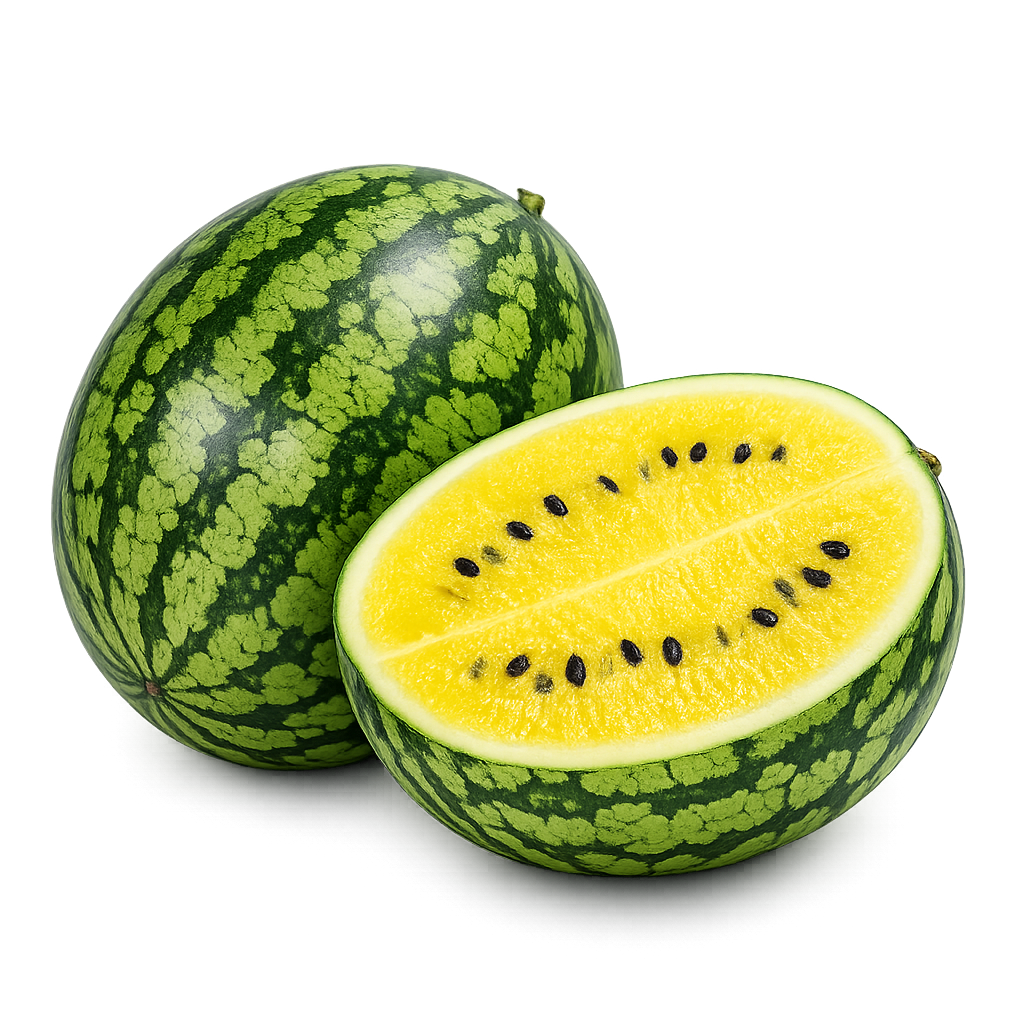
A hydrating, low-calorie summer fruit with a crisp texture and honey-like sweetness, characterized by its yellow flesh due to lower lycopene and higher xanthophyll levels.
Food note
Yellow watermelon is a specific cultivar prized for its honey-like sweetness and lower acidity compared to red varieties. From a nutritional standpoint It contains negligible amounts of Vitamin A (Beta-carotene) but retains the high citrulline and potassium levels typical of the species. It is best consumed at room temperature or slightly chilled during the peak of summer to balance its potent cooling properties.
Pros
- Rapid Post-Workout Hydration
- Supports Nitric Oxide Production
- Natural Electrolyte Source
Cons
- High Glycemic Response
- Very Low Satiety Index
- Potential for Internal Cold/Dampness
Calories by servingShow details
| Serving | Calories | Protein (P) | Carbs (C) | Fat (F) |
|---|---|---|---|---|
1 serve100 g | 41 kcal | 0.3 g | 9.5 g | 0.1 g |
Per 50 g50 g | 20.5 kcal | 0.15 g | 4.75 g | 0.05 g |
Per 100 g100 g | 41 kcal | 0.3 g | 9.5 g | 0.1 g |
Per 150 g150 g | 62 kcal | 0.45 g | 14.25 g | 0.15 g |
Per 200 g200 g | 82 kcal | 0.6 g | 19 g | 0.2 g |
Per 250 g250 g | 103 kcal | 0.75 g | 23.75 g | 0.25 g |