
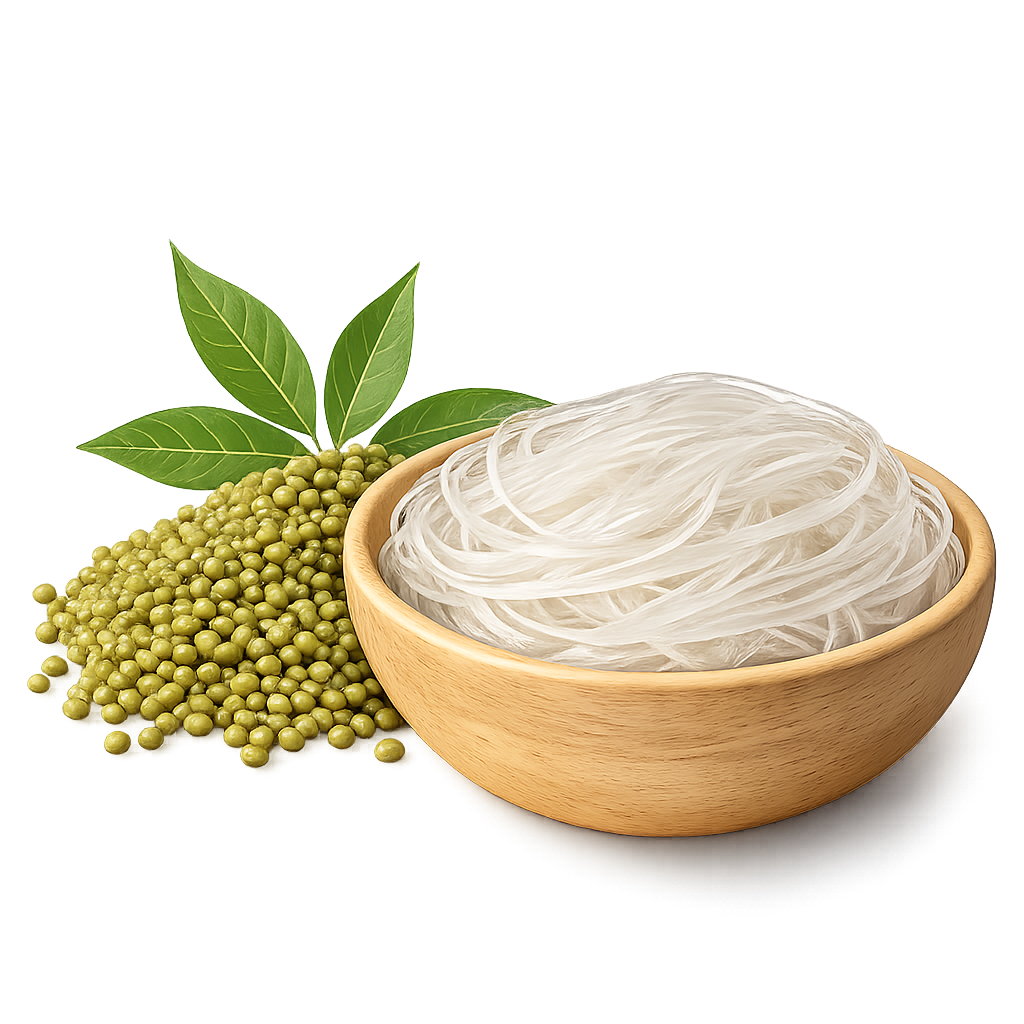
Overview
A dried mung-bean starch noodle with high carbohydrate and modest fiber compared with refined starches
Food note
Dried mung bean harusame is not equivalent to whole mung beans because most protein and micronutrients are removed. Use it as a noodle base with protein and vegetables.
Pros
- Low fat
- Fiber relative to starch noodles
- Neutral taste
Cons
- High carbohydrate
- Low protein
- Portion-sensitive glycemia
Calories by servingShow details
| Serving | Calories | Protein (P) | Carbs (C) | Fat (F) |
|---|---|---|---|---|
1 serve100 g | 344 kcal | 0.2 g | 88.5 g | 0.4 g |
Per 50 g50 g | 172 kcal | 0.1 g | 44.25 g | 0.2 g |
Per 100 g100 g | 344 kcal | 0.2 g | 88.5 g | 0.4 g |
Per 150 g150 g | 516 kcal | 0.3 g | 132.75 g | 0.6 g |
Per 200 g200 g | 688 kcal | 0.4 g | 177 g | 0.8 g |
Per 250 g250 g | 860 kcal | 0.5 g | 221.25 g | 1 g |